

The Birth of an American Legend
On November 11, 1926, a simple entry in the federal highway registry changed America forever. Route 66 — stretching 2,448 miles from Chicago, Illinois to Santa Monica, California — was officially established, weaving together eight states and three time zones into a single, legendary ribbon of road.
Who Created It — and Why?
The vision behind Route 66 belongs to two determined men: Cyrus Avery, an Oklahoma businessman and member of the Joint Board on Interstate Highways, and John Woodruff, a Springfield, Missouri entrepreneur. Avery in particular fought passionately to route the new highway through Oklahoma and the Southwest, earning him the enduring title of "Father of Route 66."
Their mission was practical, even urgent. In the 1920s, America's roads were a patchwork of dirt paths, muddy trails, and disconnected local roads. The country was modernizing rapidly — Ford's Model T had put automobiles within reach of ordinary families — but there was no reliable way to travel from the Midwest to the Pacific Coast. Route 66 was designed to change that: a continuous, numbered federal highway linking the heartland to the West.
The Road That Built a Nation
From its earliest days, Route 66 served as far more than a road. During the Great Depression of the 1930s, it became a lifeline. Hundreds of thousands of families — many of them Dust Bowl refugees from Oklahoma, Texas, and Kansas — loaded everything they owned onto trucks and cars and headed west toward California's promise of work and a better life. John Steinbeck immortalized this exodus in his 1939 novel The Grapes of Wrath, calling Route 66 "The Mother Road" — a name that has never left it.
The Golden Age of Route 66
After World War II, Route 66 entered its golden era. Returning veterans and their growing families embraced the freedom of the open road. Drive-in diners, motor courts, neon-lit motels, and roadside curiosities blossomed along every mile. Towns like Amarillo, Albuquerque, Flagstaff, and Needles became celebrated stops on a great American road trip. Bobby Troup captured the spirit perfectly in his 1946 song — later made famous by Nat King Cole — with the simple, irresistible invitation: "Get your kicks on Route 66."
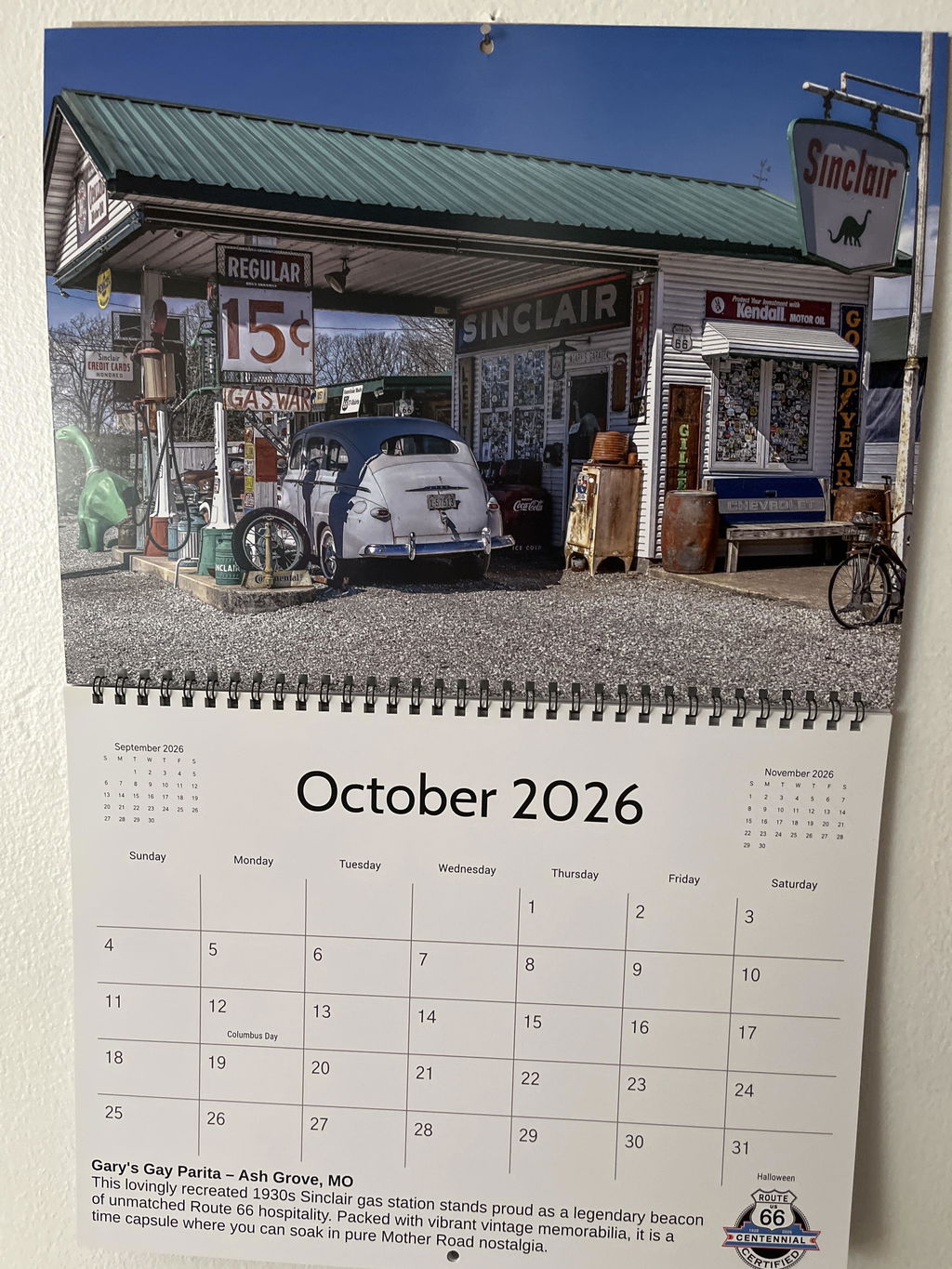
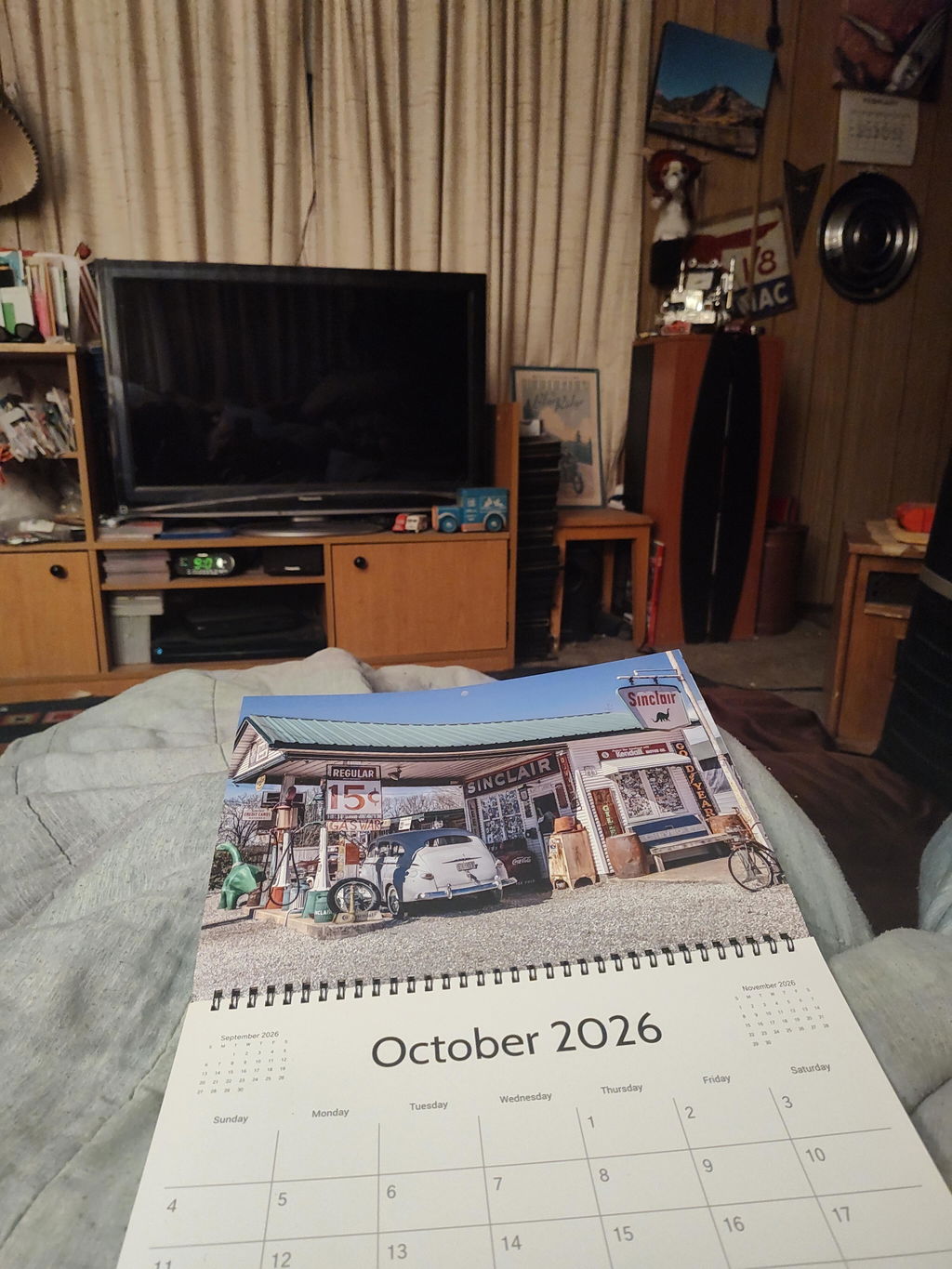
Celebrate the golden era of the Mother Road: Grab your official Route 66 Centennial Calendar — 16 months of stunning Americana imagery to keep the spirit alive all year long.
Decline — and a Remarkable Revival
The rise of the Interstate Highway System in the 1950s and 60s, championed by President Eisenhower, gradually bypassed Route 66's beloved small towns. On October 13, 1984, the last stretch of Route 66 was officially decertified as a US highway, replaced by Interstates 40, 55, and others.
But the Mother Road refused to disappear. Preservationists, travel enthusiasts, and communities along the route fought back, and today Route 66 thrives as a heritage tourism destination. The road holds the distinction of being one of the first highways added to the National Register of Historic Places, and millions of travelers from around the world make pilgrimages to drive its surviving stretches each year.
Route 66 at 100 — A Centennial Worth Celebrating
In 2026, Route 66 reaches its 100th birthday — a milestone that communities, historians, and road trip lovers have been building toward for years. The centennial is a celebration not just of a highway, but of the restless American spirit: the belief that the road ahead is always full of possibility.
Whether you're a lifelong Route 66 devotee or discovering the Mother Road for the first time, there has never been a better moment to explore its history, its culture, and its timeless allure.
Stay tuned to Travels With Randy for stories, guides, and everything you need to experience Route 66's centennial year.
📅 Ready to hit the road? Order your official Route 66 Centennial Calendar today and bring the legend home.
0 comments